


-
 Written By:
Shore Point Team
Written By:
Shore Point Team
-
 Edited By:
Shore Point Team
Edited By:
Shore Point Team
-
 Clinically Reviewed By:
Erin Andrade, LICSW
Clinically Reviewed By:
Erin Andrade, LICSW

Methadone is a gold standard treatment for Medication-assisted Treatment for Opioid addiction. NIH-backed references have shown that once the individual decides to stop methadone, gradual tapering by a 5% -10% reduction can be done weekly, bi-weekly, or in a month, along with close monitoring to lessen the risk of severe withdrawal.
Symptoms of withdrawal may begin with mild discomfort, but can intensify within a short time. It is important to understand what happens during methadone withdrawal and why moving towards a safer detox and recovery process is helpful.
What Is Methadone Withdrawal?
Methadone withdrawal refers to physical and psychological symptoms that occur after someone stops using the drug abruptly, or tapers its use faster than recommended, or has tried reducing the dose without medical supervision.
Three factors explain why and how withdrawal takes place.
How does methadone affect the brain?
When someone is treated with methadone for opioid use disorders, the drug acts upon the opioid receptors in the brain and helps manage cravings and ease withdrawal symptoms from other opioids.
Because methadone acts slowly to stabilize mood, it creates a stable effect without the rapid highs and lows associated with other shorter-acting opioids. Over time, the brain begins to depend on methadone and adapt to its presence, which may lead to dependence.
Why does the body react when methadone use is stopped or decreased?
With dependence, the brain and body rely on the drug to function normally. As a result, when someone quits methadone or reduces its dose without medical supervision, the body finds it difficult to adjust, leading to uncomfortable symptoms that we commonly refer to as withdrawal.
The brain and body have to readapt and learn to function without methadone. Since this adjustment takes time, the brain becomes overactive in an attempt to restore normal functioning, giving rise to uncomfortable symptoms that may persist for days or months.
Why does methadone withdrawal often last longer than other opioids?
Methadone withdrawal lasts longer than other opioids because it has a longer half-life, meaning it stays active in the body for longer durations. Thus, withdrawal symptoms may begin a little later than other opioids, but also persist longer. The withdrawal phase can be prolonged and challenging for the individual experiencing it.
Methadone Withdrawal Symptoms
The onset of withdrawal symptoms may take time to surface as methadone is a long-acting opioid. However, once withdrawal begins, symptoms may intensify within the next few hours.
Early symptoms | Moderate symptoms | Severe symptoms |
|
|
|
If methadone withdrawal symptoms are gradually becoming intense and worse, it’s time to seek medical support that makes the process safer and more manageable.
Call us at tel:5089388079 to learn about the confidential admission process and insurance verification coverage.
Methadone Withdrawal Timeline: What You Need to Know
One common question people often ask when they come for methadone detox is – how long do withdrawal symptoms last? The answer to this depends on several factors, such as how long the person has been using methadone, dosage, health condition, and whether methadone was tapered or stopped abruptly.
Methadone withdrawal starts later than other short-acting opioids because of its long-acting nature and slow elimination process, which can make withdrawal continue for a longer duration than most other opioids.
First 24–48 Hours – onset stage
When methadone levels start dropping in the body, some early symptoms begin to develop. These include anxiety, restlessness, sweating, body aches, a runny nose, and flu-like discomfort. Many people also experience sleep disturbances along with a general feeling of uneasiness.
Days 3–7 – peak stage
Within the next few days, symptoms will intensify and become more intense and noticeable. The individual may experience stomach cramps, diarrhea, vomiting, chills, muscle pain, and stronger drug cravings. Mood swings and irritability are also common at this stage.
Weeks 2–4 – stabilization stage
During this time, the body gradually adjusts, and physical symptoms begin to improve. However, individuals may still be experiencing low energy, poor sleep, anxiety, difficulty concentrating, or lingering cravings. These can make recovery feel emotionally exhausting.
Post-Acute Withdrawal Syndrome (PAWS) – weeks to months
Some individuals experience lingering symptoms such as frequent mood changes, sleep problems, emotional sensitivity, and cravings. These symptoms are less intense but emotionally overwhelming to deal with, as they may continue for a few weeks to months.
To know more about our medical detox services, get in touch now.
What Causes Methadone Withdrawal and Increases the Risk of Severe Symptoms?
Methadone withdrawal occurs when the body struggles to maintain balance without it and triggers uncomfortable physical and psychological symptoms.
- Long-term methadone use
- Suddenly reducing the dose or stopping abruptly
- Changes in brain chemistry due to drug dependence
- Taking high doses of methadone
- A history of opioid addiction
- Co-occurring mental health conditions
- Multiple drug use may complicate the detox process, with severe symptoms
If you or anyone you know is carrying one or more of these risk factors, it is essential to consult a healthcare professional before reducing or stopping methadone to ensure a safer and more manageable withdrawal process.
Benefits of Choosing A Professional Methadone Withdrawal Treatment
A professional methadone withdrawal treatment has several advantages other than just managing safe withdrawal and helping eliminate the substance from the body with stability and comfort.
- Medical monitoring of body vitals during detox reduces health risks
- Reduces withdrawal discomfort
- Helps manage cravings and prevent relapse
- Offers emotional support to patients during recovery
- Lowers risk of overdose as close monitoring ensures individuals are not using methadone with other substances.
- Provides a structured recovery environment with therapy, aftercare, and a relapse prevention plan all in one place.
How Methadone Withdrawal Is Treated At Shore Point Recovery
At Shore Point Recovery, we believe in providing monitored, specialized care. Our methadone addiction treatment focuses on symptom management, stabilization, and relapse prevention.
Medical detox
A medically supervised taper helps ease withdrawal symptoms and lowers health risks. Methadone dose is lowered gradually to decrease dependence while managing withdrawal safely. During detox, individuals are closely monitored to reduce their physical and psychological discomfort.
Medications used during detox
Some of the common medications used during methadone addiction treatment are:
- Buprenorphine is sometimes used to ease opioid cravings and withdrawal symptoms
- Ondansetron may be used to relieve nausea and vomiting
- Ibuprofen can help ease headaches and muscle pain
- Vitamin and electrolyte supplements are given to correct nutritional gaps that occur in substance use disorders.
Benefits of professional detox
- Offers a medically supervised tapering of methadone
- Reduces the physical discomfort associated with withdrawal
- Creates a stable, trigger-free environment focused on recovery
Inpatient Rehab
Inpatient treatment is a residential facility where individuals experiencing severe withdrawal symptoms can live in the facility under 24/7 medical support. They can benefit by undergoing a supervised detox along with scheduled therapy sessions that manage their triggers and cravings, thus facilitating a lasting recovery.
Outpatient Treatment
These are flexible treatment programs where individuals can come in for regular follow-up after their detox. They can attend scheduled therapy sessions that promote cravings management, recognizing triggers and managing them, and also build necessary relapse prevention skills that help in lasting recovery.
Dual Diagnosis Treatment
Dual diagnosis treatment supports individuals dealing with both methadone addiction and mental health conditions such as anxiety, depression, or trauma. Treating both issues together can improve emotional stability, reduce relapse risks,
Long-term recovery support
After the initial treatment is over and the individual is stable, long-term recovery support should be a part of the treatment plan so that relapse can be prevented and successful recovery seems achievable. To this end, various approaches are designed to meet individual needs.
Therapy: Various therapeutic modalities are used, including Cognitive Behavioral Therapy (CBT), Dialectical Behavior Therapy (DBT), motivational interviewing, and individual counseling, which can help individuals manage cravings, cope with triggers, and build healthier thought patterns.
Peer support: Support groups offer a safe space where people recovering from methadone addiction or withdrawal can share their personal experiences with each other. Shared recovery experiences can provide encouragement and help build a sense of connection throughout recovery.
Healthy lifestyle changes: Recovery programs help individuals learn to maintain healthy routines by eating nutritious meals, engaging in regular exercise, and maintaining a consistent routine that supports long-term physical and emotional healing.
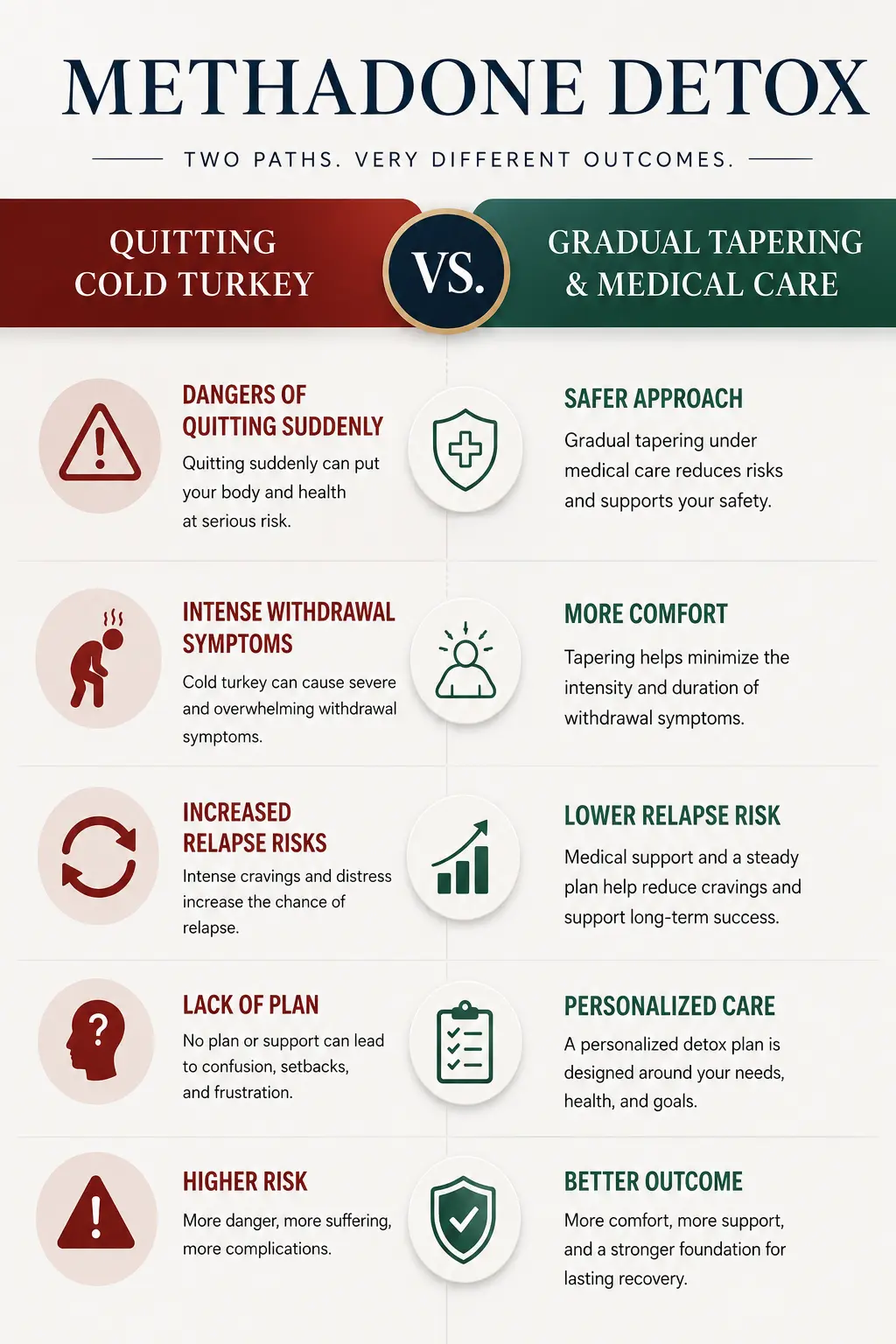
Methadone Detox Vs. Quitting Cold Turkey
Being an opioid, methadone carries the risk of addiction and dependence, and stopping cold turkey is not only uncomfortable but dangerous. A medical detox plan supports recovery outcomes with safety and stability.
Why Choose Shore Point Recovery for Treating Methadone Withdrawal?
Personalized treatment plans: Our methadone detox and rehab plans are designed to meet individual needs. Doctors track progress and can adjust treatment as needed.
Evidence-based medical care: Our care plans are based on clinically proven treatment methods. A personalized support and medically supervised approach is designed to promote safer withdrawal and stabilize the person’s overall health.
Expert-led team: Our recovery center provides expert medical oversight. There is prompt access to medical professionals who can monitor symptoms and adjust medications. They can also respond quickly to complications.
Luxury accommodation: Our residential living spaces are comfortable and designed to help individuals feel at ease during treatment.
Integrated care: We offer a full spectrum of care, including mental health support, family involvement, and resources to treat substance dependence.
About The Contributors

Erin Andrade, LICSW
Program Director

Shore Point Team
Team Member

Shore Point Team
Team Member