

-
 Written By:
Shore Point Team
-
 Edited By:
Shore Point Team
-
 Clinically Reviewed By:
Erin Andrade, LICSW
Discharge day usually brings a mix of relief and uncertainty. For weeks, your days had a clear shape: sessions, check-ins, and people who knew your name. Then the schedule opens up. Maybe you’re back at work, back in your apartment, or staying with family who love you but don’t fully understand what you’ve been through. Those first weeks can feel quiet, and that quiet can be hard to sit with.
Your support network changes the moment you leave treatment. Friends, family, and daily routines may look different than they did before you came in. Some of the people who once made up your everyday world may not be a safe place to lean on. Building a new circle takes time, and it helps to have someone to turn to while you do it.
This is where alumni support can help. An alumni community can offer something that clinical care alone doesn’t provide: shared experience, everyday encouragement, and a sense of belonging. Treatment teams help you build a plan, manage symptoms, and address medical needs. Alumni groups help you live the plan, one ordinary day at a time. The two work best together, with alumni support as a companion to professional care rather than a substitute for it.
In this guide, we’ll look at what a rehab alumni program is, the benefits it can offer, what makes a community well run, how it differs from aftercare, and how to choose the right fit. We’ll also show how we approach continuing support at Shore Point Recovery, our treatment center in Wareham, Massachusetts.
What Is a Rehab Alumni Program?
A rehab alumni program is a community for people who have completed treatment and want to stay connected after discharge. Typically, people join after finishing a program at a particular treatment center, although some programs welcome anyone in recovery. Some are run by the treatment provider. Others are organized by former patients, families, or local recovery groups. The structure varies, but the purpose stays the same: keeping people in touch with others who understand what recovery requires.
Alumni programs usually offer a mix of formats. You might find alumni gatherings, either in person or online. There may be peer check-ins by phone or text, recovery-focused social activities like hikes or holiday dinners, and mentorship between members who have been in recovery longer and those who are newer. Some programs also keep in contact through their treatment provider, where that option exists.
A general recovery meeting is open to anyone in recovery and has no formal link to a treatment program. An alumni program usually grows out of a specific treatment experience. That shared starting point is part of what makes it feel familiar. Participation is also usually voluntary, so you can attend as often as you want and step back when you need to.
Many programs sit inside a wider plan, which is why it helps to understand aftercare planning for addiction recovery before you join. Alumni involvement works best when it’s one part of a larger plan.
Why Does Support Matter After Rehab?
Treatment runs on structure. Daily schedules, therapy sessions, and medication check-ins give your days a shape. At discharge, most of that disappears at once. You go back to work, to family responsibilities, and to social circles that were there before treatment. Some of those people may still use, which can make everyday life harder.
The early months can feel uneven. Some people feel steady for weeks and then hit a wall after something stressful happens. Others find evenings and weekends lonely, because the staff and groups that filled their days are gone. A good discharge plan takes those stretches into account, and peer contact is one practical way to fill the gaps between appointments.
Practical problems add pressure too. Missed appointments, unpaid bills, and trouble finding stable housing can make a recovery plan harder to follow. Someone who has faced the same problems can often tell you what helped them.
The Substance Abuse and Mental Health Services Administration (SAMHSA) says peer recovery support services help people stay engaged in recovery and lower their chances of relapse. That statement comes from its 2009 manual. Read it as a goal, not a guarantee, because the research below is more cautious.
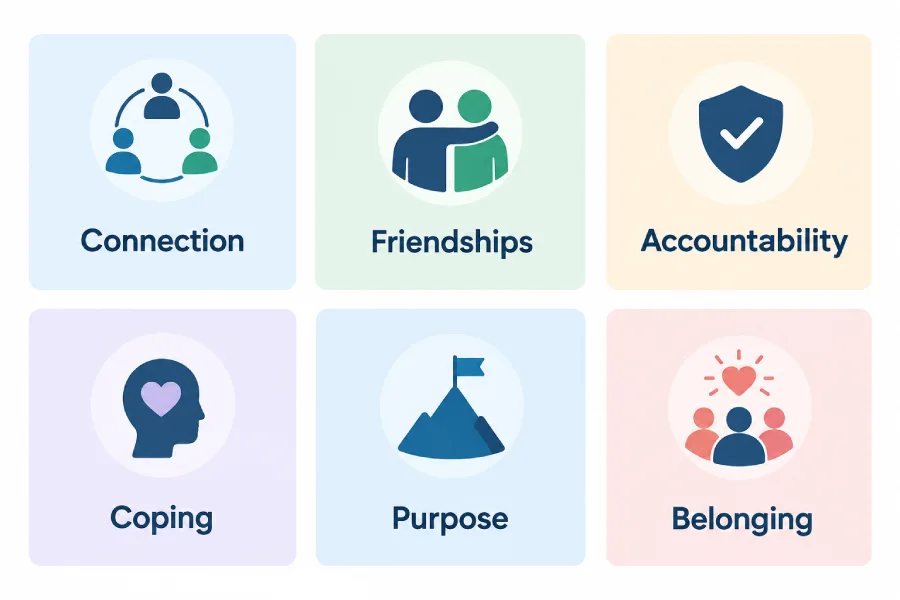
Six Benefits of Alumni Support After Rehab
The research on peer support is still growing, so treat these six as likely benefits rather than guarantees. A 2019 review found that peer recovery support was commonly linked to less substance use and fewer relapses. It also found many null results and significant methodological limits. A 2025 update by the same team looked at 28 multi-group studies with more than 12,000 participants. A later review in Substance Abuse and Rehabilitation reports that the strongest evidence in that update was for treatment linkage and engagement, with less established for substance use itself.
Peer support also has a specific meaning. SAMHSA describes these services as designed and delivered by people who have lived through substance use disorder and recovery. Each benefit below comes from that shared experience.
1. Staying Connected With People Who Understand Recovery
Shared experience changes the tone of a conversation. When you talk with someone who has faced cravings, a slip, or the long road back to daily life, you spend less time explaining the basics. You can say what’s hard without worrying about being judged or misunderstood. That kind of recognition can help people open up in ways they couldn’t with friends or family who haven’t been through it. Over time, that openness can make it easier to ask for help early, before small struggles grow.
2. Building a Social Life That Supports Recovery
Many people leave treatment with a smaller social circle than they had before. Old friendships may center on drinking or using, and open evenings can feel risky. Alumni events offer another option. A hiking group, a movie night, or a holiday dinner gives you a reason to spend time with people in a setting that has nothing to do with substances. Friendships formed this way usually grow slowly. After a few months, familiar faces can become a regular part of your week. A life built around recovery needs more than abstinence. It needs things to look forward to.
3. Creating Accountability Through Regular Check-Ins
Accountability works best when it feels supportive rather than policing. Some alumni programs offer voluntary check-ins, such as a quick phone call, a text with a member you trust, or a monthly catch-up. These contacts give you a chance to say how you’re doing before small problems build. Peers can also encourage you to keep up with the plan you made with your treatment team, like a meeting you wanted to attend or a routine you hoped to restart. The encouragement comes from people who know that consistency takes effort. Because it’s voluntary, you decide when to share and how much.
4. Learning From Other People’s Recovery Experiences
Other people in recovery have often faced the same everyday pressures you’re facing. They may have dealt with a tense family dinner, a coworker who drinks at lunch, or a weekend that felt too long. Hearing how they handled those moments can give you ideas you hadn’t considered. You might pick up a coping strategy, a way to set a boundary, or a reminder that a hard day doesn’t last forever. Still, what works for one person may not fit your life, your health, or your relationships. Treat these stories as options to try, not instructions to follow.
5. Finding Purpose Through Mentorship and Giving Back
Helping others can be a meaningful part of recovery, but timing matters. SAMHSA describes peer support in terms of a peer leader in stable recovery who supports someone else. That suggests the helper role fits best once you have enough stability to hold space for another person. Where a program offers mentorship or volunteer roles, eligible alumni may share their experience, encourage a newer member, or help with a group activity. If you’re still early in recovery, it’s fine to receive support first. When you’re ready, these roles can give your week structure and a sense of contribution. Ask what the requirements are before you take one on.
6. Maintaining a Sense of Belonging After Treatment Ends
The months after discharge can feel isolating, even for people with a strong home life. Treatment has a clear beginning and end, and once it’s over, the daily structure fades. An alumni community can help keep a sense of belonging going. Relationships formed during treatment can continue after you leave, and new ones can form in a group that stays open to you over time. Belonging doesn’t solve every difficulty, but it gives you somewhere to turn when the quiet starts to weigh on you.
What Makes an Alumni Community Effective?
Not every alumni community is well run, and not every program offers everything listed here. Before you join, ask the provider what its program actually includes. The five characteristics below can help you judge whether a group is worth your time.
1. Consistent, Accessible Opportunities to Participate
A strong community meets at predictable times and makes it easy to attend. Ask how often members connect and whether meetings are in person, virtual, or both. Consistency helps you plan your week. Phone or video options matter too, because they make it possible to stay involved when travel is hard.
2. Respect for Confidentiality and Personal Boundaries
Members share personal stories, and that takes trust. A well-designed group explains its privacy expectations clearly and makes it clear that no one should repeat another person’s story outside the group. Boundaries matter as well. Members should not pressure one another about relationships, money, or medical decisions.
3. A Welcoming Environment Without Pressure to Share
New members should be able to listen before they speak. A welcoming group explains what to expect at a first visit and doesn’t require anyone to tell their full story right away. Sharing should be a choice, not a requirement for belonging.
4. Clear Expectations Around Peer Roles and Responsibilities
Peers bring lived experience, but they are not clinicians. A well-run program explains what mentors, volunteers, and facilitators do, and where their role ends. It also clarifies what members are not expected to do, such as giving medical advice or managing someone else’s crisis.
5. Referral Pathways to Professional Support
Peer support has limits. When someone’s needs go beyond what a peer can provide, the group should know how to connect that person with a doctor, counselor, or crisis line. A clear referral path protects members and keeps the community focused on what it does well.
If a program can’t explain how it handles these five areas, that’s worth noticing. Ask questions before you commit, and treat the answers as part of your decision.
Alumni Support vs. Aftercare: What’s the Difference?
Alumni programs and aftercare are often mentioned in the same breath, but they play different roles. The table below shows how they compare.
| Alumni Community | Clinical Aftercare |
| Peer connection and shared experience | Ongoing professional treatment |
| Social engagement and mutual encouragement | Therapy, psychiatric follow-up, or other indicated services |
| May be informal or provider-organized | Planned around clinical needs and goals |
| Does not replace professional care | Can include formal assessment and treatment |
The two can complement each other well. Aftercare provides clinical follow-up, such as therapy or medication support, and it’s planned around your health needs. An alumni community gives you people to lean on between appointments. Clinical aftercare can take several forms, including intensive outpatient programs and outpatient rehab. Your treatment team can help you choose the right level of care and decide how alumni involvement fits alongside it.
An alumni program is not necessarily a formal clinical service, and calling a group an alumni program doesn’t guarantee a particular level of support. That’s why it’s worth asking what each one actually includes.
Read more about aftercare planning page.
How to Find the Right Recovery Community After Rehab
Finding the right community takes a few questions and a few visits. Start with your treatment team, then compare what each group actually offers.
Questions to Ask Before You Join
- Who is eligible to participate?
- Are meetings in person, virtual, or both?
- How often do alumni connect?
- Are family members included?
- What privacy expectations apply?
- Can alumni connect with professional care if their needs change?
Before you leave treatment, ask your team for the names and dates of your next level of care, and ask which alumni or peer groups they can refer you to. Keep that information somewhere easy to reach, like your phone.
Community Options in Massachusetts
Massachusetts offers several kinds of community support, and they are not interchangeable. Provider alumni programs are connected to a treatment organization. Peer recovery centers, such as those listed by the Massachusetts Department of Public Health, offer education, social events, and wellness groups. Spectrum Health Systems, for example, runs peer-led centers in Lawrence, Lynn, Marlborough, Southbridge, and Worcester. Mutual-aid groups like AA, NA, and SMART Recovery run on their own structures.
If you’re in early recovery and working with a treatment provider, ask whether Access to Recovery (ATR) could fit. It’s a state program run by the Bureau of Substance Addiction Services, and it’s designed to add to existing services. You usually come in through an approved referral partner.
How We Support Recovery After Treatment
Our aftercare planning begins during residential treatment, not after you leave. Case managers and clinicians work with you on a plan built around your needs, and that plan can include family when it’s appropriate. Coordinated next steps may include partial hospitalization, intensive outpatient care, or outpatient services, depending on what you need. The plan can also connect you with recovery supports and, where it fits, peer and alumni communities.
Our residential program includes an alumni community with in-person or virtual gatherings and peer mentorship. Because programs change over time, confirm the current details with the admissions team before you plan around them.
Talk With Someone Today
Call our 24/7 confidential helpline at (508) 938-8079
If you’re thinking about what comes next, you can also visit the contact page and talk through what might fit your situation.