

-
 Written By:
Shore Point Team
Written By:
Shore Point Team
-
 Edited By:
Shore Point Team
Edited By:
Shore Point Team
-
 Clinically Reviewed By:
Erin Andrade, LICSW
Clinically Reviewed By:
Erin Andrade, LICSW
For many, the signs of alcohol dependence are not always obvious. On the surface, these individuals appear successful in their professions. From fulfilling work commitments to carrying out family responsibilities, they seem perfectly fine and carry a polished image. However, they may be hiding their regular drinking habits so well that families and friends may not notice there’s a problem.
High-functioning alcoholics develop unhealthy drinking patterns gradually, and since they continue to function in their daily life without much of a problem, the signs of alcohol addiction are often ignored or dismissed. As dependency deepens over time, it is crucial to spot the warning signs before the condition worsens.
Key takeaways:
The individual may appear outwardly stable and completely in control while still silently struggling with alcohol dependence. High-functioning alcoholism often stays hidden because the warning signs are easy to overlook beneath a completely fine outward image.
The signs are not always obvious. Daily habits cause damage gradually. Some small patterns like relying on alcohol to cope, hiding drinking habits, or struggling to cut down use can signal a deeper problem.
It is important to spot the signs early, as it can bring a meaningful difference. The sooner someone seeks support, the better their chances of addressing the problem before it causes serious physical or psychological harm. |
Who Is a High-Functioning Alcoholic?
A high-functioning alcoholic is someone who struggles with alcohol dependence but appears successful in their career and manages daily responsibilities easily. They keep up relationships and stay socially active, but never let others see their emotional struggles.
These individuals might seem to have everything under control, but their health slowly worsens, and everything can fall apart quickly. High-functioning alcoholics may binge drink on weekends or settle for a few drinks every day, with little or no discomfort at all. This is simply because they have developed a functional tolerance to alcohol. They seem unaffected even after consuming amounts of alcohol that would noticeably impair most others.
High-functioning alcoholism is not a clinical diagnosis but refers to a person who masks alcohol use behind a facade of normalcy.
How to Know If Someone with High-Functioning Alcoholism is Turning Towards AUD
To be diagnosed with AUD, people who are high-functioning usually show these signs:
- Needing to drink more than before to feel the same effect
- Feeling shaky, anxious, or unwell when not drinking
- Spending a lot of time drinking or recovering afterward
- Trying to cut back or quit alcohol, but struggling to do so
- Continuing to drink despite physical or emotional harm
- Losing interest in hobbies, relationships, or activities once enjoyed
Why High-Functioning Alcoholics Are Hard To Recognize?
High-functioning alcoholics are hard to recognize because of two major reasons:
- Mask of normalcy: Their ability to manage daily life while being heavily dependent on alcohol often causes others to overlook the problem, since nothing outwardly seems wrong.
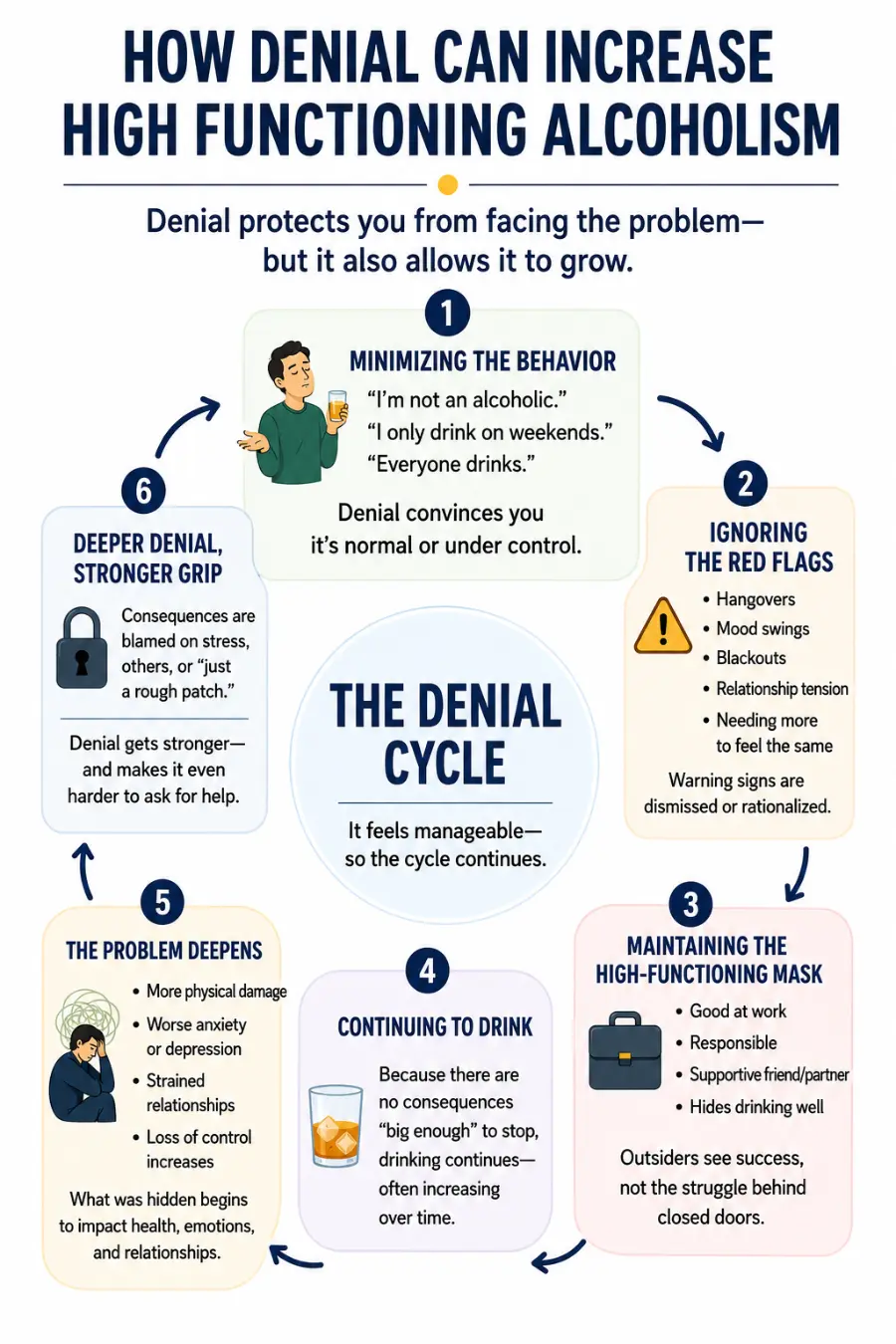
- Denial: Sometimes, the individual themselves may get into denial mode. They may:
- They casually joke about heavy drinking, making it seem normal.
- They compare themselves to other drinkers to downplay the problem.
- Their professional success creates the illusion of control, as if it’s not serious at all
- Since there are no immediate consequences, the issue is easier to hide.
- They justify their drinking by saying that they pay bills, run homes, and avoid legal consequences.
- They may normalize everyday drinking without appearing intoxicated or sick.
All these make the individual feel they are in a safe zone, delaying recognition of the problem and leading to late or no help.
Research backing:
According to NIH-backed research references, denial of problem drinking is a major constraint in AUD treatment. The study found that 67%–82% of people who met clinical criteria for AUD still viewed themselves as mild or moderate drinkers. They do not admit they have a problem, showing how easily denial can mask the severity of alcohol dependence.
7 Signs of a High-Functioning Alcoholic
Since high-functioning alcoholics often struggle with alcohol dependency alone, their internal suffering can be far greater than those whose struggles are more visible. These individuals often suffer in silence while trying to maintain the appearance of being completely fine.
For Them, Alcohol Is Part of Daily Life
Individuals with functional tolerance to alcohol often drink on a daily basis. For them, alcohol consumption is a routine and not an occasional habit. They may drink most days of the week, every day, in large or small amounts, and often look forward to their next indulgence.
They also feel anxious, upset, or angry when not able to drink or when alcohol is not available, no matter what the reason may be. Over time, alcohol dependence grows bigger each day, yet they live in denial and continue to work and lead their day-to-day life as usual.
They Can Drink More Than Most People
One common sign of high-functioning alcoholics is their high alcohol tolerance. They may need larger amounts of alcohol to feel the same buzz they once felt with lesser amounts. Even after heavy drinking, they may rarely appear intoxicated, which can make others believe their drinking is under control.
One major risk associated with such instances is alcohol overdose. When someone feels less impaired even after drinking more than others, it doesn’t mean they are in a safe zone. Instead, higher tolerance can be deceptive. The blood alcohol concentration (BAC) can become dangerously high, leading to an overdose.
They Use Alcohol to Cope With Stress
For someone who stays professionally busy, alcohol often becomes their go-to way of handling life’s ups and downs. In times of excessive workload, deadlines, emotional struggles, or even celebrations, drinking becomes tied to both coping and rewarding oneself. They may consider alcohol as a solution to every problem that they face in their daily lives.
They Hide or Justify Their Drinking
These individuals may hide their drinking habits from families and friends by drinking in isolation or becoming defensive when someone sees them drinking. Many become skilled in justifying their actions by saying that they are drinking because it was a hard day, or they are just celebrating a small success in business or professional endeavors.
They may set personal rules, such as drinking only on weekends or choosing only premium liquor, convincing themselves that these boundaries mean their drinking is under control.
Relationships and Responsibilities Are Starting to Suffer
Even when these individuals go about their daily lives and relationships quite normally, the impact often builds gradually until relationships fall apart and conflicts with family members become normal. They may have missed commitments, and their work productivity has lessened, which can lead to constant family arguments that are hard to ignore.
They Can’t Easily Cut Back
Individuals living with unhealthy drinking habits may promise themselves or their loved ones that they will drink less or set limits. But despite their efforts, they may find it difficult to cut back or quit alcohol. They often end up drinking more than planned. Their repeated failures can lead to family conflicts, failed relationships, and job loss. Since they find it hard to cut back on alcohol, it can be a strong sign of alcohol dependence.
They Experience Physical or Emotional Withdrawal
When trying to cut back or quit alcohol, they often experience withdrawal symptoms such as irritability, anxiety, and trouble sleeping. Some physical symptoms include shaking, sweating, and headaches. These signs suggest the body has started depending on alcohol to function normally. When withdrawal symptoms intensify or worsen, relapse may occur as the individual may again fall back on alcohol to regain control over their life and feel better.
Are There Hidden Signs People Often Miss?
Yes, people often miss serious hidden signs that can intensify problem drinking and keep the person in denial that everything is fine at the moment.
- Drinking before important meetings or appearing confident before a social event
- Always keeping alcohol nearby
- Their social outings, dinner, and vacations are not without alcohol
- Frequently forgetting events and conversations that took place
- They may avoid family events or social gatherings where drinks are not present; they may turn down invitations upfront
- Becomes angry, irritable, and impulsive when asked about drinking
Are There Any Physical Signs Of High-functioning Alcoholics?
Yes, functional alcoholics may have several physical signs of alcohol dependence that they may either dismiss or ignore just because they seem to function normally every day, despite facing issues.
- Regular hangovers
- Feeling tired too often
- Red or irritated eyes
- Noticeable facial puffiness
- Digestive discomfort, including nausea, bloating, or indigestion
- Unexplained weight changes
- Trembling hands, especially after waking up
- Difficulty speaking clearly
- Poor coordination after drinking
These signs may be subtle at the beginning, hard to trace, but gradually intensify and become more noticeable with prolonged alcohol use.
Risk Factors Of HIgh-functioning Alcoholism
There are several risk factors that may increase the chances of someone developing high-functioning alcoholic tendencies.
Alcohol tolerance
When someone drinks heavily for prolonged durations, their tolerance levels increase, and each time they may require higher amounts of alcohol to feel the same previous effects. Thus, they drink more and more to experience the same desired effects, increasing high-functioning alcoholism.
Workplaces endorsing alcohol use
In many places, there is a culture of after-work drinks or alcohol-centered events. Individuals may attend client meetings where drinks are common, and drinking can start to feel like part of the job.
Stress
If someone experiences high levels of stress at work, or faces strained relationships, or has multiple issues to think about in their daily lives, they may get pushed towards repeated drinking. Alcohol is often used to relax and cope with difficult feelings.
Co-occurring mental health conditions
People living with mental health conditions such as anxiety, depression, or trauma may face a higher risk of alcohol use disorder. They often turn to alcohol to numb emotional pain or temporarily cope with overwhelming symptoms.
Why High-functioning Alcoholism Is Dangerous?
Prolonged alcohol use can affect someone’s physical and mental health in diverse ways:
Physical Health risks:
- Liver damage
- Worsening heart health
- Poor gut function
Mental Health risks:
- Increased anxiety
- Frequent mood swings
- Lack of clarity in decision-making
- Poor focus over time
- Frequent memory lapse
- Feeling low and depressed
Progression To Alcohol Use Disorder:
- False sense of control
- Denials leading to delays in seeking treatment
- Normalized drinking whenever feeling low or stressed
- Less control over daily triggers
- Increased cravings
- Gradual increase in dependence
When to Seek Professional Help
Seeking professional help is important when signs of alcohol dependence intensify, such as in:
- Difficulty in cutting down use
- Frequent urges to drink
- Withdrawal symptoms when not drinking
- Persistent mood crashes and irritability
- Declining work performance
Treatment Options And Recovery
Alcohol addiction treatment is not the same for everyone. For high-functioning alcoholics, treatment should target the underlying emotional triggers, stress, and denial for their complete recovery.
Some of the common treatment options include:
Detox — Alcohol detox can help safely remove alcohol while managing withdrawal symptoms under medical supervision. It is usually the first step in recovery for people with physical dependence.
Outpatient treatment — High-functioning alcoholics can get themselves treated in outpatient care, where they can receive therapy and treatment while continuing with work or family responsibilities. It offers them flexibility along with professional rehab care.
Residential rehab — This is ideally suited for people with severe alcohol dependence. It provides a structured, supportive environment where individuals can focus fully on recovery while avoiding daily triggers and stressors.
Therapeutic Support— Therapy interventions for high-functioning alcoholics focus on breaking denial, identifying hidden emotional triggers, and replacing alcohol-based coping with healthier strategies. Various therapeutic approaches, such as CBT, DBT, and trauma-care, can help individuals recognize faulty thought patterns that lead to persistent drinking habits and improve their emotional regulation with healthier coping techniques.