

-
 Written By:
Shore Point Team
Written By:
Shore Point Team
-
 Edited By:
Shore Point Team
Edited By:
Shore Point Team
-
 Clinically Reviewed By:
Erin Andrade, LICSW
Clinically Reviewed By:
Erin Andrade, LICSW
Xanax addiction recovery can be challenging when daily stress brings back stronger cravings even after detox and rehab. In most cases, these cravings increase when daily stress, such as work demands, relationship conflict, and financial uncertainty, remind the person how Xanax previously helped them cope with anxious moments.
Since the brain is still learning how to function without relying on Xanax, stressful situations feel harder to manage and lead to cravings. This can also increase the risk of relapse. Understanding stress triggers and managing them appropriately is crucial for maintaining long-term recovery.
Key takeaways:
During recovery, stressful situations may remind the brain of the relief Xanax once seemed to provide. Because of this connection, cravings can suddenly reappear even after someone has stopped using the medication.
Medical detox for substance use is the beginning. Recovery doesn’t stop with detox. It requires intensive therapy and the use of relapse prevention plans after detox. During recovery, slight emotional overwhelm can remind the individual about how Xanax had helped them, causing urges to use it again.
Stopping Xanax use through a drug detox program is only a part of the recovery journey. The individual can learn healthier ways to handle stress, which can make it easier to manage cravings and maintain long-term recovery. |
What Are Xanax Cravings?
Xanax is a prescription medication that falls under benzodiazepine drugs, commonly used to treat panic attacks, anxiety, and sleep disturbances. For those needing comprehensive care, residential treatment provides a structured environment for recovery. This drug is known for its calming effects, and people who use it quite often feel relaxed and stress-free. According to the National Center for Drug Abuse Statistics, 15.5% prescription drug users reported that they use sedatives to cope with difficult emotions.
Xanax cravings refer to an intense urge or strong desire to re-use xanax after the individual has either stopped or reduced use. These cravings are triggered by specific environmental cues, stress, or situations connected to past use. The individual misses the relief effects of xanax to cope with stress.
Symptoms of xanax cravings
- Constant thoughts about using Xanax again
- Strong urges to seek relief through the drug
- Irritability or feeling easily frustrated
- Feeling unusually anxious
- Sudden feelings of panic
- having trouble with sleep
- Feeling uneasy, or on edge, without knowing why
Why do cravings continue even after detox?
Many people experience Xanax cravings even after detox because detox is a process that safely removes Xanax from the body by managing withdrawal. However, detox doesn’t address the underlying psychological factors of substance dependence.
The brain may still be adjusting, and emotional triggers or stress bring back the desire to use the drug again. Recovery needs more than just detox. It often needs learning healthier coping skills to manage stress without relying on substances.
Signs Stress Is Triggering Xanax Cravings
If you or your loved one is experiencing Xanax cravings, knowing whether stress is triggering them would help manage them appropriately.
Some of the signs to watch for are:
- Thinking of Xanax when feeling emotionally overwhelmed
- Increased restlessness when Xanax is not around
- Cannot relax naturally without taking the drug
- Trouble coping with everyday stress without thinking about having the drug
- Seeking Xanax as a quick relief instead of using other coping mechanisms
- Sleep disturbances that increase the desire to seek relief by using Xanax
How Stress Affects the Brain During Xanax Recovery?
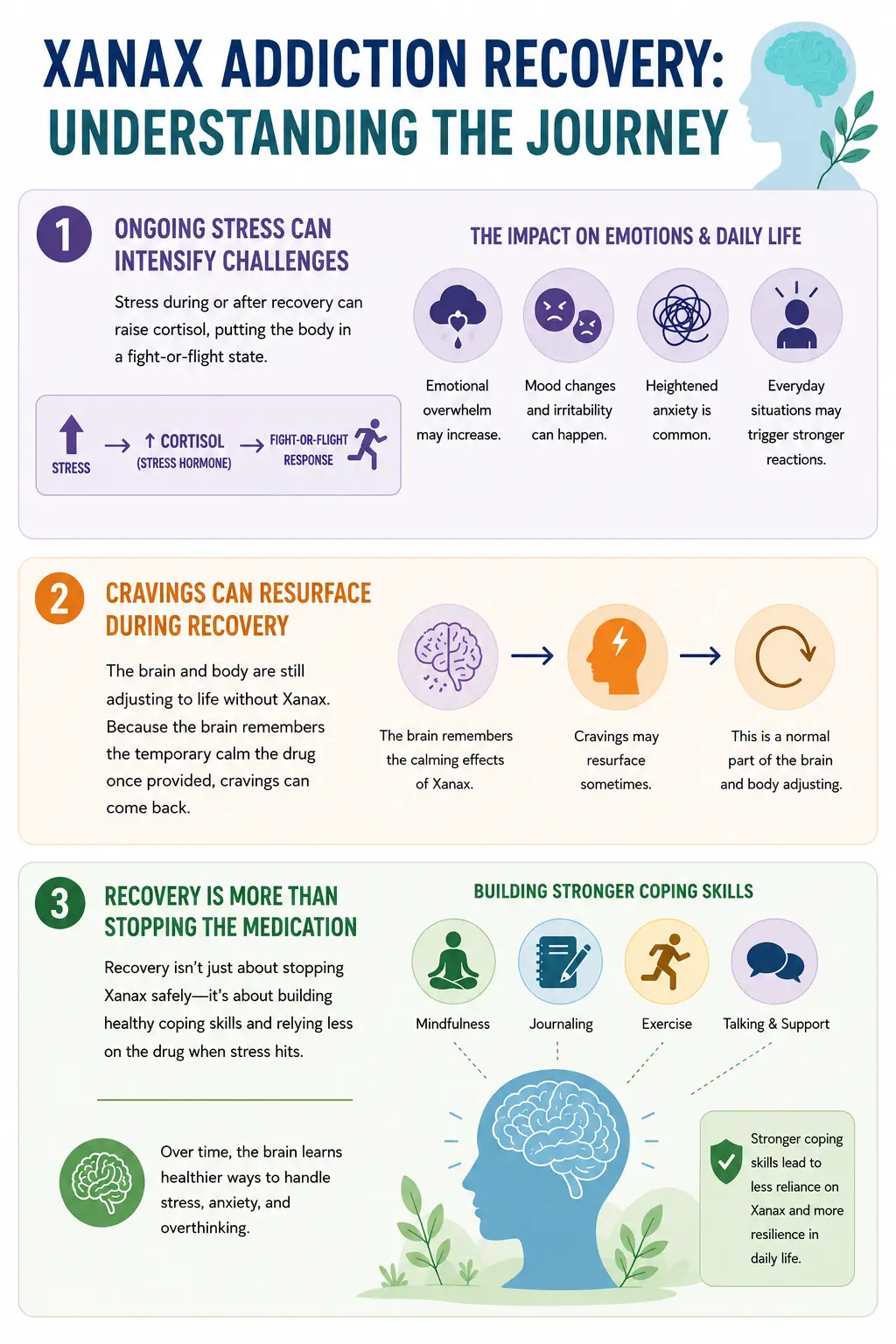
Xanax addiction recovery not only means learning to safely stop using the medication but also building coping skills that ensure less reliance on the substance in moments of stress. During recovery, the brain gradually learns ways to handle stress, anxiety, and overthinking.
Because the brain and body are still gradually readjusting to the absence of Xanax, cravings may resurface occasionally as the brain remembers the temporary calming effects of the drug. Ongoing stress during or just after recovery can lead to increased cortisol, a stress hormone that puts the body in a fight-or-flight state.
As a result, emotional overwhelm may intensify, and the individual may experience mood changes, irritability, and heightened anxiety. Even everyday situations that once seemed manageable now trigger stronger emotional reactions, making long-term recovery challenging.
Hidden Stress Triggers That Can Increase Xanax Cravings And Relapse Risks
Stress often triggers stronger urges because the brain associates the medication with relief, calmness, and an escape from difficult moments.
Work-related & financial pressure
When work pressure and financial worries begin to pile up day by day, the individual may live in constant worry, which increases their mental suffering. Factors like job uncertainty, layoff news, and increasing cost of living may add to their daily woes. This mental distress can increase cravings for something that once felt calming.
Social anxiety and panic
Some individuals crave substances when they feel socially isolated and carry the fear of being judged by others. Their lack of self-confidence leads to constant worry and overthinking about how others may see them in social spaces. They may feel tempted to use something that helps them overcome this fear temporarily.
Trauma
Trauma can trigger strong Xanax cravings because past memories and intrusive flashbacks keep the person in a state of mental agitation, anxiety, fear, and sadness. They seek relief, and their brain reminds them of Xanax as a quick fix.
Lack of sleep
When the body and mind feel exhausted, the person feels stressed-out and their mood changes, patience diminishes, and everyday stressful situations seem unmanageable. They crave Xanax more as they seek momentary relief from what they are experiencing.
Conflict at home
If there is frequent tension, arguing, and relationship difficulties, the individual craves something that can relieve their current state of mind. Xanax is often seen as a relief that can provide a short-term sense of calm.
Social media stress
Someone scrolling through social media news feeds and reels may fall into a trap where constant comparison and negative content cause emotional distress. Feelings of self-doubt, uncertainty, and fear of not measuring up can lead to stress. The person begins to seek an escape that helps, and relying on substances like Xanax, which brings calm, is seen as appealing.
Poor mental health management
Xanax cravings can persist when the person finds it difficult to manage their anxiety, and stress piles up gradually. They do not take adequate care of their mental health, and resist building coping skills, and prefer a quick fix to recover from stress, even if it is just a temporary relief.
Negative environments
The person’s immediate living space, whether at home, in an office, or at a social gathering, affects their stress levels. Being surrounded by negative people and toxic situations can feel overwhelming and can quickly increase anxiety, and they may crave Xanax to reduce it.
Exposure to drug-related reminders
Sometimes, drug-related reminders may add stress when someone is still recovering from Xanax addiction. Certain people, routines, or situations can unexpectedly bring back strong memories of past use, leading to uncontrollable cravings.
How to Manage Stress Without Xanax
Managing stress without relying on Xanax means developing healthier coping mechanisms in daily life that can reduce overwhelming feelings and foster emotional stability.
Practice meditation: It helps reduce overthinking and keeps the individual focused on the present moment. They experience an inner calm that automatically reduces mental restlessness and reliance on drugs to cope with stress.
Keep moving: It is essential to stay active by engaging in brisk walking or playing active sports to help control racing thoughts and overwhelming feelings. Simple moves like dancing and stretching can help you feel energized and optimistic.
Take care of sleep and eating habits: Balanced meals and restful sleep promote a calm mind and peaceful feelings. You will be able to handle stressful circumstances with better focus and logical insight.
Be part of support groups: Joining a support group can make an individual feel less isolated and alone during recovery. Support groups comprise people who have experienced similar symptoms and can offer insights that support recovery.
Create stress management plans: Stress becomes easier to manage when you learn the necessary coping skills that show you how to respond and when not to. Having a self-created stress management plan can prevent stressful moments.
Bring positive changes to your daily life: Stress feels lighter when you learn to live in the moment and spend time doing things you enjoy. Sometimes, staying in touch with family and friends supports your mental well-being and keeps stress at bay.
Treatment Options for Xanax Addiction
Medical detox
This is the essential first step towards recovery. Here, Xanax withdrawal symptoms are managed safely, allowing the body to stabilize and the brain to readjust functioning without the drug.
Inpatient rehab
Inpatient rehab offers 24/7 clinical care in a residential setting. Individuals can continue therapy and rehab treatment by staying in the treatment facility. Treatment is customized to the individual’s clinical needs.
Outpatient treatment
These are flexible programs that ensure patients recover without having to leave their daily work and responsibilities. The individual can attend scheduled therapies and learn relapse prevention strategies, and use them in managing cravings in real-life situations.
Dual diagnosis care
Dual diagnosis is an integrated treatment plan that addresses Xanax addiction alongside mental health conditions, if any. Both conditions are treated together to manage symptoms and support long-term healing.
Therapy
There are various therapy modalities that can effectively treat Xanax addiction, like CBT, trauma-informed care, and group counseling. These approaches help individuals understand their triggers and build healthier coping skills during recovery.
When to Seek Professional Help
Seeking professional support for Xanax addiction becomes essential if you notice these signs persisting over time and becoming difficult to fight alone.
- Cravings becoming uncontrollable
- Using Xanax again after a time gap
- Increased mental restlessness
- Unable to focus and accomplish daily tasks
- Sleep disturbances