
-
 Written By:
Shore Point Team
Written By:
Shore Point Team
-
 Edited By:
Shore Point Team
Edited By:
Shore Point Team
-
 Clinically Reviewed By:
Erin Andrade, LICSW
Clinically Reviewed By:
Erin Andrade, LICSW
Key Takeaways
- Yes, you can overdose on gabapentin—but the greatest danger usually comes from mixing it with opioids, fentanyl, alcohol, benzodiazepines, or other sedatives that can slow or stop breathing.
- There is no universal overdose dose. Age, kidney function, overall health, and whether other substances were taken all play a major role in how serious an overdose becomes.
- Extreme drowsiness, slowed breathing, and difficulty waking someone are medical emergencies. If you suspect a gabapentin overdose, call 911 immediately—prompt treatment can be lifesaving.
Gabapentin (Neurontin®) is often described as a medication with a lower overdose risk than opioids or benzodiazepines. That can create the false impression that taking too much is harmless.
The reality is more nuanced.
Yes, you can overdose on gabapentin. While overdoses involving gabapentin alone are less likely to be fatal than many other drugs, they can still become medical emergencies, especially when gabapentin is taken with opioids, alcohol, benzodiazepines, or by someone with reduced kidney function.
Understanding the warning signs and knowing when to seek emergency care can save a life.
“One of the biggest misconceptions we hear is that prescription medications are automatically safe simply because a doctor prescribed them. Every medication has risks, especially when it’s taken differently than intended or combined with other substances.” , Erin Andrade, LICSW
56% of overdose deaths involving gabapentin-like medications
also involved synthetic opioids in 2020—most commonly fentanyl.
Can You Overdose on Gabapentin?
Yes, but the severity depends on several important factors.
Unlike opioids, gabapentin does not usually stop breathing when taken by itself in healthy adults. However, taking a large amount can overwhelm the body’s nervous system, leading to significant sedation, confusion, impaired coordination, and in severe cases, respiratory depression or coma.
The risk increases dramatically if the person:
- Takes opioids (such as oxycodone, fentanyl, or heroin)
- Drinks alcohol
- Uses benzodiazepines like Xanax®, Ativan®, or Klonopin®
- Has kidney disease or reduced kidney function
- Is an older adult or medically fragile
One important fact many articles overlook: there is no universal “overdose dose” for gabapentin. A dose that causes only mild symptoms in one person could become life-threatening in another depending on age, kidney function, body size, other medications, and overall health.
What Are the Signs of a Gabapentin Overdose?
Symptoms often develop as the medication increasingly slows activity in the brain and central nervous system.
Common symptoms include:
- Extreme drowsiness
- Confusion
- Slurred speech
- Double or blurred vision
- Poor balance or inability to walk normally
- Muscle weakness
- Nausea or vomiting
- Tremors
- Low blood pressure
- Rapid heartbeat
More serious symptoms include:
- Difficulty staying awake
- Slow or difficult breathing
- Blue lips or fingertips
- Unresponsiveness
- Coma
If someone cannot be awakened or is having trouble breathing, call 911 immediately.
When Is a Gabapentin Overdose Most Dangerous?
For most healthy adults, a gabapentin overdose by itself is less likely to be fatal than an overdose involving opioids or benzodiazepines. The greatest danger occurs when gabapentin is combined with other substances that slow the brain and breathing.
In these situations, the effects don’t simply add together, they can amplify one another, making it much easier for breathing to slow to dangerous levels before someone realizes an overdose is happening.
The highest-risk combinations include:
- Opioids (prescription pain medications, heroin, or fentanyl): This is the combination physicians worry about most. Both opioids and gabapentin suppress the central nervous system. Together, they significantly increase the risk of profound sedation, slowed breathing (respiratory depression), unconsciousness, and fatal overdose. Research has found that people taking both medications have a substantially higher risk of opioid-related overdose and death compared with people taking opioids alone.
- Fentanyl: Illicit fentanyl deserves special mention because it is already extremely potent on its own. Even small amounts can suppress breathing, and adding gabapentin may further reduce a person’s ability to stay awake or breathe adequately. Toxicology reports from many opioid overdose deaths have identified gabapentin alongside fentanyl or other opioids, highlighting how frequently these drugs are involved together.
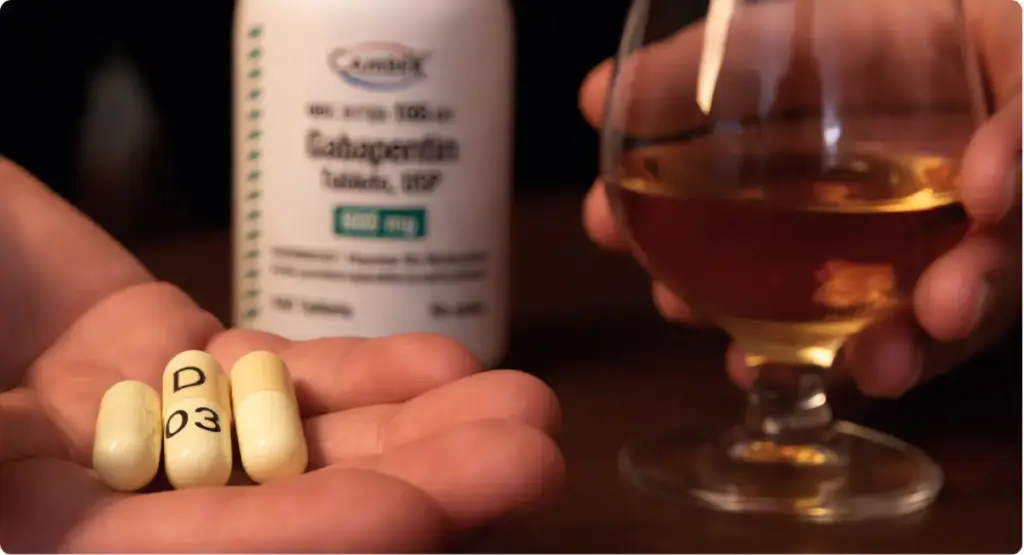
- Alcohol: Alcohol also depresses the central nervous system. When combined with gabapentin, it can greatly increase drowsiness, dizziness, poor coordination, slowed reaction time, and impaired judgment. In higher amounts, the combination can contribute to dangerous respiratory depression and make it more difficult for someone to recognize that they need emergency medical care.
- Benzodiazepines (Xanax®, Ativan®, Klonopin®, Valium®): These medications are prescribed for anxiety, panic disorders, and seizures, but they also slow brain activity. Combining them with gabapentin can cause excessive sedation, confusion, memory impairment, and significantly increase the risk of slowed or stopped breathing.
- Sleeping medications and other sedatives: Prescription sleep medications such as zolpidem (Ambien®), muscle relaxants, certain antihistamines, and other medications with sedating effects may also increase overdose risk when taken with gabapentin. While some combinations may be medically appropriate under close supervision, taking them outside of a physician’s instructions can become dangerous.
Why opioids deserve special attention
Among all these combinations, gabapentin and opioids carry the strongest evidence for increased overdose risk.
Over the past decade, healthcare providers and public health agencies have become increasingly concerned about this combination because studies consistently show that patients taking both medications are more likely to experience respiratory depression, require emergency medical care, or die from an opioid-related overdose than patients taking opioids alone.
For that reason, many healthcare providers now:
- Carefully evaluate whether gabapentin and opioids should be prescribed together.
- Prescribe the lowest effective doses when both medications are medically necessary.
- Monitor patients more closely for excessive sedation or breathing problems.
- Recommend having naloxone (Narcan®) available for patients who are prescribed opioids, especially if gabapentin is also part of their treatment plan.
It’s important to remember that many fatal overdoses involving gabapentin are not caused by gabapentin alone. Instead, they occur because gabapentin is one part of a combination of medications or substances that collectively suppress breathing until the body no longer gets enough oxygen. Recognizing these high-risk combinations and avoiding them unless specifically directed by your healthcare provider, is one of the most effective ways to reduce the risk of overdose.
What Should You Do If Someone Takes Too Much Gabapentin?
If you suspect an overdose, don’t wait for symptoms to become severe.
Call 911 immediately if the person:
- Cannot stay awake
- Has slowed or stopped breathing
- Cannot be awakened
- Is having seizures
- Turns blue or gray around the lips
While waiting for emergency responders:
- Keep the person awake if possible.
- Do not force food, drinks, or additional medications.
- If unconscious but breathing, place them on their side (recovery position).
- Stay with them until help arrives.
Should you give naloxone (Narcan)?
This is a question many people ask but few articles explain clearly.
Naloxone does not reverse gabapentin itself.
However, if there is any chance opioids were also taken, and that’s often impossible to know during an emergency, administering naloxone is still recommended because it can reverse the opioid portion of the overdose while EMS is on the way.
Who Is at Higher Risk of Serious Gabapentin Toxicity?
Certain people are more vulnerable even when taking doses that might not affect someone else as severely.
Higher-risk groups include:
- Adults over age 65
- People with chronic kidney disease
- Individuals taking multiple sedating medications
- People with opioid use disorder
- Anyone intentionally taking large amounts of gabapentin
Because gabapentin is cleared through the kidneys, impaired kidney function allows the medication to remain in the body much longer, increasing the risk of toxic effects.
Can You Recover From a Gabapentin Overdose?
In many cases, yes.
Most people recover fully with prompt medical care and supportive treatment. Hospital teams may provide:
- Heart and breathing monitoring
- IV fluids
- Airway support if needed
- Observation until the medication clears
For people with severe kidney impairment, dialysis may occasionally be used to help remove gabapentin from the bloodstream, a treatment option that many general articles never mention but can be important in select medical situations.
Does an Overdose Mean Someone Has a Gabapentin Addiction?
Not necessarily.
Some overdoses happen because someone accidentally takes too much medication or combines prescriptions without realizing the risks.
Others occur because gabapentin is being misused for its sedating effects or to enhance the effects of opioids.
If gabapentin is being taken in larger doses than prescribed, used recreationally, or repeatedly mixed with other substances despite harmful consequences, it may be time for a professional substance use evaluation.
“An overdose is often the moment people realize something has changed in their relationship with a medication. Reaching out for help isn’t about judgment, it’s about preventing the next emergency before it happens.”, Erin Andrade, LICSW
When to Seek Help
An overdose can be frightening, but it can also be an opportunity to address a developing problem before it becomes more serious.
If you or someone you love is misusing gabapentin, or combining it with opioids, alcohol, or other substances, professional treatment can help reduce the risk of another overdose. At Shore Point Recovery, our medical detox and flexible outpatient programs provide evidence-based care for substance use and co-occurring mental health disorders, helping people safely begin recovery with the level of support that fits their needs.
Frequently Asked
Questions about Can You Overdose On Gabapentin
Is gabapentin overdose usually fatal?
Is gabapentin overdose usually fatal?
Not by itself. Most people survive gabapentin-only overdoses with appropriate medical treatment. The greatest danger comes from combining gabapentin with opioids, alcohol, or other medications that suppress breathing.
How long does a gabapentin overdose last?
How long does a gabapentin overdose last?
Symptoms can last several hours, but recovery depends on the amount taken, kidney function, and whether other substances were involved.
Does an Overdose Mean Someone Has a Gabapentin Addiction?
Does an Overdose Mean Someone Has a Gabapentin Addiction?
Yes. Taking more than prescribed, even accidentally, or combining it with alcohol or sedatives can increase the risk of overdose.
Should I go to the emergency room if I accidentally took extra gabapentin?
Should I go to the emergency room if I accidentally took extra gabapentin?
If you’re unusually sleepy, confused, having trouble breathing, or took a very large amount, seek immediate medical evaluation. When in doubt, contact Poison Control or call 911 if symptoms are severe.